
Thursday, July 24, 2008


Saturday, June 7, 2008
Auto Show
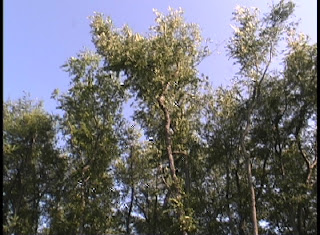
 The summer season is upon us again... this will be the view from The Porch for the next 3 months.
Sunday, June 1, 2008
Scarf

I took a lot of shots of this silk scarf, trying to capture the movement of the scarf in the wind of a late spring day. I was trying to capture the feeling of being suspended in a calm moment in time, the childhood feeling of having a whole summer ahead and your time open and free. (Do any kids get that wonderful feeling anymore? Or are their summers so scheduled with activities that they never get to experience those wonderful childhood moments of being lost in an activity with nothing to stop them?)
Sunday, April 27, 2008
A note about canola oil...
 This is what happens when you ask a [literal] engineer who is also an [expressive] artist to leave you a note about canola oil. (Yeah, corny joke.)
Sketchbook Numbers Quilt

Maybe it's time for open source fonts. After I typed that, I remembered "google first" (today's RTFM) and realized of course there's a lot of thought around that, and in exactly the direction I was thinking. More variety of fonts available more widely for web design.
Of course, even after solving the problem of ensuring the font you want is on all systems (even microsoft), ya gotta ask: Do we really want more fonts available? Aren't most websites ugly enough?
I have a long-held prejudice against a layout containing more than maybe two typefaces. When I was in gradeschool, I'd often stop after school at our small town weekly, where my mother might be laying out the paper. She'd be standing at the layout table, holding her "scalpel" (exacto-knife), moving articles and ads around with a very literal cut-and-paste technique. She'd grumble about some of the pre-designed ads that would come in which were "messy" - too many words, too many typefaces, too crowded, too ugly.
I'd listen to her while copying letterforms out of a linotype typeface catalog with a blue mark-up pencil.
She made me love simple designs with well-chosen typefaces.
Sunday, April 20, 2008
Babydoll Blankets

When I was little, my grandmother let me take small pieces of fabric from her scrap basket to make "babydoll blankets". I sat on her lap at her sewing machine and pieced together scraps of polyester doubleknit (hey, it was the late 60s). I didn't call it piecing or quilting, and we certainly didn't consider it art. It was the beginning of my love of quilts, and the whole idea of making something beautiful from the leftovers.
Pojagi
Twenty years ago I visited Korea with a friend. Although I came away with a love for Korean food and the beauty of the countryside, I did not discover Korean patchwork then. Pojagi is a Korean patchwork craft that is used to make wrappings. Chung-hie Lee is a Korean fiber artist. Here she is at RISD.
Narrative vs Non-narrative
The part of our brain that makes us most human, the frontal cortex, is the part of the brain in charge of narrative. There's such a need to create a narrative cause-and-effect that we sling together the random images from memory consolidation into dream narratives. ("I was standing at the edge of a lake, then suddenly the lake became a glass path and I walked across it and into a grocery store, but the shelves were full of plastic animals...")
I'm curious about how different parts of the brain respond to narrative and non-narrative art. Is there an innate human response to representational art that makes us create a narrative around the work? ("Who put the bowl of fruit on the table? Why is the girl in the dress on her hands and knees so far from the house on the hill? Why are the old people with the pitchfork frowning?") Why is explicitly narrative art seemingly more accessible? Renaissance painters like Titian or Botticelli still spark discussion about the narratives of their paintings, but so-called "starter art" such as Norman Rockwell is accessible precisely because of the narrative content of the images.
How does the response to non-representational art differ? Why is it harder for adults to adjust to? ("Gee, Marge, anybody could throw and drip paint around like that. I can't believe it's hanging in a museum!") I say adults because children don't seem to have difficulty accessing Pollack or Rothko or de Kooning. Is that because the dorsolateral prefrontal cortex, which has been shown to inhibit spontaneity (see this article), is less developed in children? Does the extent to which the brain "edits" affect the response to art, as well as the creation of art?
"What're you lookin' at?"

So I know painting pets can be cutesy and cliche, and this may well not be an exception, but for me, the challenge is to move away from a drafting, engineering drawing style and into a looser exploration of color and movement. And if you look around me seeking movement, you can't miss the wiener dogs.
Saturday, March 8, 2008

Friday, February 29, 2008
Curtains
 Provincetown, MA. Another image with little context. How much context is needed? I'm interested in stripping away all but the essence of an image.
Thursday, February 28, 2008

Friday, February 15, 2008

Monday, February 11, 2008
Three steps

...or three states. Solid, liquid, gas. No plasma in sight, however. (And what's jello, anyway? A solid? Oh, no, wait... it's proteins suspended in liquid. Colloid. Although when I was growing up it was canned pineapple suspended in lime green jiggles.)
As for the image, I liked the contrast of the rocks to the water, and the stark shadows versus the somewhat out-of-focus water.
Wind
Click to Play
The windchimes aren't a separate audio track -- they were in the moment, yet to me sound like another layer above the sound of the leaves. If it were a longer clip, I think the audio could work alone. To me, it's very calming.
Tuesday, February 5, 2008
Bird on a Wire

I was trying to get the bird that was sitting on the telephone wire. The other bird flying through the shot was just a happy accident.
Monday, February 4, 2008
Charles River, Winter

There's something about having context stripped away, leaving just the essence of the pattern or color
Friday, February 1, 2008


Cardboard Quilt

Here's a quilt on my desk. What do you do when you have paint chips that are sticky on one side? You make something. Paint chips on black matboard 2006. Desk 2008. (OK, why do they make sticky paint chips, anyway?)
First
 This is a detail of a larger painting. I'm not sure when or how the fire hydrant theme started, but this may have been the first one. This is from 2002 or 2003.
Saturday, January 26, 2008

Friday, January 25, 2008

Thursday, January 24, 2008
Blowing Paper

This was filmed as part of Henri Herre's film workshop at MassArt. The exercise was a study in static-vs-movement. The music is just a little garageband noodling. I can see a sort of lounge video as a compliment to lounge/chill-out music. Imagine a little club lit only by the glow of non-narrative video. The tempo's probably too fast, but I think there's something to play with in here.
Tuesday, January 22, 2008
Blur
 This was taken from a moving car in the rain. There's blur from the motion, but also the water on the window.
Monday, January 21, 2008
Spiral
 Another view of a fire hydrant. The snail caught my eye against the red of the hydrant, and it was only later that I realized there were two spirals in the image, man-made and natural, fractal and linear.
Sunday, January 20, 2008

Unexpected Beauty

All photography is editing. This is a close-up shot of part of a fire hydrant on the cape.
Ninepatch

This ninepatch is leather on acrylic on canvas. A note about the leather - it was scrap leather my grandmother bought years ago from a coat factory. She would take the scrap leather, piece it together on muslin like a crazy quilt, but usually all the same color leather, and make coats out of it. These are from some scraps that never made it onto a coat.
Subscribe to:
Posts (Atom)
